
Interior Landscaping Services in Mobile, AL: A Practical Guide to Live Plant Rentals That Stay Presentable
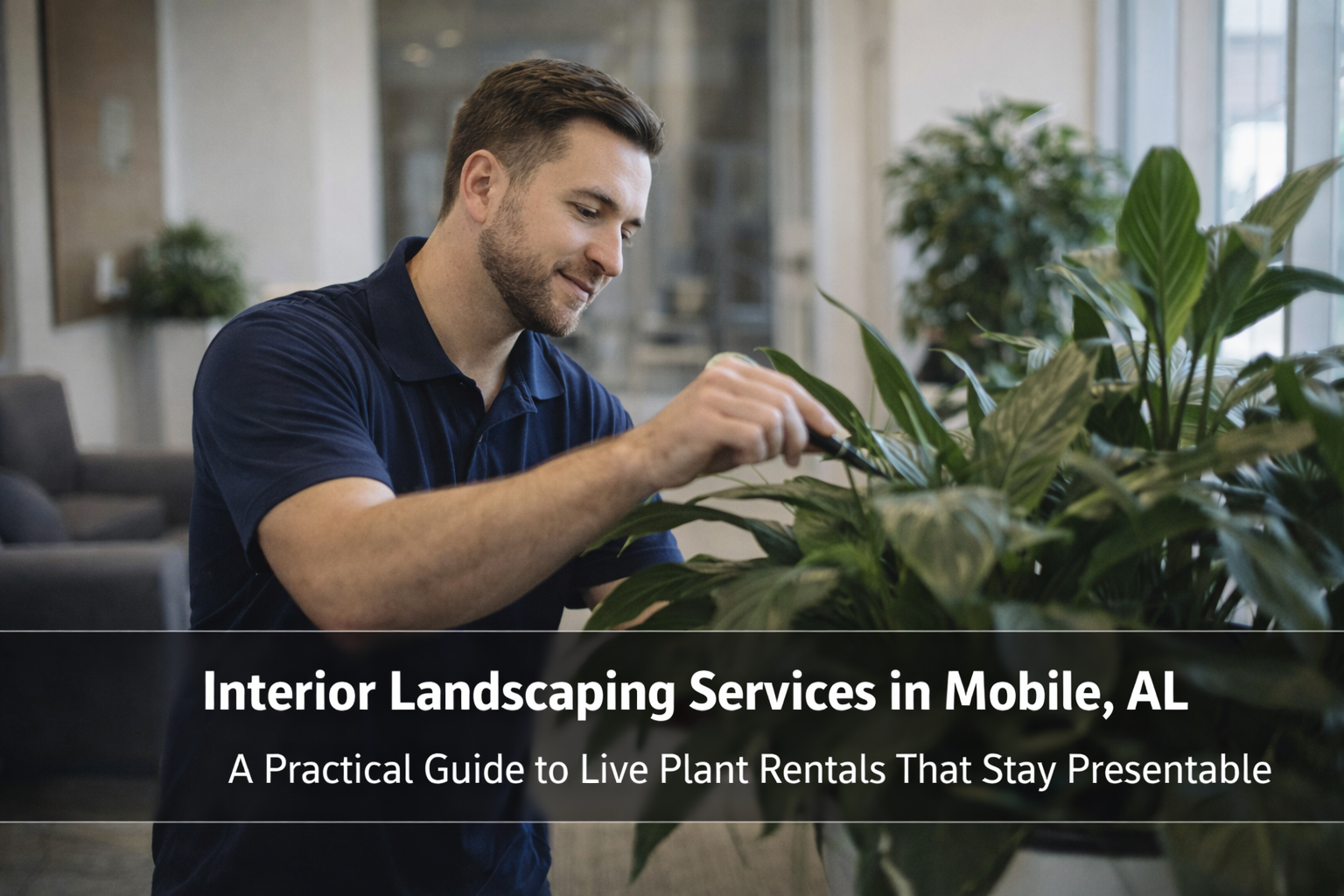
The front desk looks good until you notice the plants. Here’s how interior landscaping services and live plant rentals help Mobile businesses stay polished without adding another task to someone’s day.
The real problem: plants are either a brand upgrade or a weekly headache
Indoor greenery is one of the few upgrades that changes how a space feels without a remodel. It softens hard surfaces, makes waiting areas feel calmer, and adds a polished, cared-for look. But most problems with indoor plants are predictable, and they almost never get solved by buying one more plant. A typical commercial space runs into a few realities:- Light is not consistent. A bright lobby can have a dark corner. A hallway can look fine to people but still be low light for plants.
- Watering is irregular. The staff are busy. One person overwaters to be safe; another avoids it entirely.
- HVAC changes the environment. Chilly air blowing on leaves, dry vents, and temperature swings can stress plants even when the room feels comfortable for people.
- Plants get placed for looks, not for survival. The “perfect” spot for symmetry might be the worst spot for the plant.
What interior landscaping services usually include (and what they do not)
Plantscaping services vary, but the best ones feel like a simple system: selection, placement, routine care, and replacement planning when needed. Here is what you can expect from a professional approach:Placement and design that fits the space
This is not about trendy design languages. It is about choosing plants that work with the light you have, the foot traffic you get, and the look you are going for. A healthcare waiting area, a corporate lobby, and a property management office do not need the same plant “vibe,” and they do not need the same plant species either.Routine maintenance that prevents slow decline
Most plant problems are not sudden. They build slowly: droop, leaf drop, discoloration, soil staying too wet, pests showing up, containers getting grimy. Regular care keeps small issues from becoming visible problems. Maintenance typically involves:- Watering with a consistent approach based on plant needs and environment
- Pruning and grooming (removing dead leaves, shaping for appearance)
- Basic plant health checks (spotting stress early)
- Rotating or adjusting placement if light or airflow is a problem
- Keeping containers tidy and presentable
Replacement planning without drama
No honest provider should promise that every plant will thrive forever. Commercial spaces change. Lighting changes. HVAC changes. People bump plants. The value of a service is having a plan when a plant starts to struggle, so you are not scrambling in front of clients or tenants.What this is not
Interior plant service is not a guarantee of perfect outcomes. It’s also not a substitute for building repairs, moisture fixes, or diagnosing health concerns. It’s a practical maintenance service focused on presentation and plant viability, not claims and promises.Live plant rentals vs. owning plants: how to decide without overthinking
The live plant rental model can be a strong fit for commercial spaces because it simplifies responsibility. Instead of buying plants, hoping they work, and replacing them yourself, you’re typically setting up a recurring system built around consistency. Live plant rentals tend to work best when:- You want your space to look “always ready” without staff managing plant care
- You need a cohesive look across multiple areas (lobby, conference room, hallways)
- You’ve had a cycle of buying plants and losing them
- You’re managing a property where presentation affects trust and leasing conversations
- You need an easy reset option when a plant fails or a layout changes
- You already have someone on-site who truly owns plant care
- Your plant locations and lighting are stable and well-understood
- You want full control over the exact species and containers (and you’re willing to manage replacements)
The Mobile factor: humidity, HVAC, and why “easy plants” still struggle indoors
Mobile’s climate matters even when the plants are inside. Outdoor humidity, frequent rain, and long warm seasons create a different baseline than a dry climate. Indoors, you get the opposite problem at times: air conditioning running for comfort, vents drying out leaves, and temperature swings that stress plants near doors or windows. A few common issues show up in Gulf Coast commercial buildings:Pests happen, even in clean spaces
In humid regions, pests can show up faster and spread quietly. That doesn’t mean a building is dirty. It usually means plants are under stress, the environment is favorable, and the issue wasn’t caught early. Routine checks and consistent care help reduce escalation.Overwatering is the most common “helpful mistake”
People worry plants are thirsty, so they water more. In many indoor settings, the opposite is true: soil stays wet longer than expected, roots struggle, and leaves start to yellow. This is why scheduled care matters more than good intentions.Placement near vents and entrances is a hidden problem
A plant under an AC vent can look fine for weeks, then suddenly drop leaves. A plant near an exterior door can deal with temperature swings and drafts that do not show up on a thermostat. A professional will notice patterns and adjust placement before the plant looks bad.What makes a plant look premium in a commercial space
Most people assume premium plants mean expensive plants. The “premium” comes from presentation and consistency. A space looks higher end when:- Containers match the environment (materials, color, scale)
- Plants are the right size for the spot (not too small, not crowding walkways)
- Leaves look groomed (no dead foliage hanging around)
- The arrangement feels intentional (balanced height, spacing, and placement)
- Plants are stable and upright (not leaning awkwardly toward light)
Preventative care: the small details that keep plants from becoming a complaint
In commercial environments, plants don’t just “live.” They perform. They’re part of the experience your visitors and tenants get. Preventative care is what keeps them from turning into a distraction. Here are the practical habits that matter most:Consistent watering that’s based on the site, not a schedule
Watering “every Tuesday” sounds organized, but it ignores reality. A lobby with sun exposure will dry differently than a hallway. A plant in direct airflow will dry differently than one in a calm corner. A real maintenance routine adjusts based on conditions.Grooming for appearance, not just survival
Removing dead leaves, trimming uneven growth, and cleaning containers is what keeps plants from looking like an afterthought.Early detection of stress
Most issues have early signs: dull leaves, droop, leaf drop, spots, or slow decline. Catching it early means minor adjustments can fix it. Catching it late usually means replacement or a big intervention.Clear replacement planning
When a plant isn’t thriving, the goal is to protect the space’s appearance. That might mean relocating it, swapping it out, or changing the plant choice for that spot going forward. This is the boring stuff. It’s also the stuff that keeps your lobby from looking neglected.What to expect from a service walkthrough or assessment
A walkthrough should feel calm and practical, not like a sales pitch. A good provider is trying to understand your space, so they can recommend a plan that works. Expect questions like:- Which areas matter most visually (lobby, front desk, waiting room, conference rooms)
- What your lighting looks like throughout the day
- Whether staff currently water plants, and what problems you’ve had
- How strict your cleanliness expectations are (especially in healthcare settings)
- Whether you want a consistent look across the building or just “key zones” to look sharp
- Airflow from vents
- Traffic patterns that cause bumps or tipping
- Spots where plants will always struggle because of low light
- Container sizing relative to plant size and room scale
Cost factors: what drives pricing up or down (estimates only)
Interior plant care costs are rarely about one thing. They’re about scope and complexity. Pricing varies by provider and plan, but the drivers are usually consistent.What affects cost for interior landscaping services
- Number of plants and locations: more zones mean more time and complexity
- Plant size and container weight: larger plants take more labor to move, groom, and maintain
- Maintenance frequency: weekly, biweekly, or a custom schedule changes staffing needs
- Access and logistics: multi-floor buildings, secure areas, and tight schedules add time
- Condition of existing plants: reviving struggling plants can take more work than starting fresh
- Replacement approach: some plans include swap-outs as part of the service, others handle replacements separately
What affects cost for live plant rentals
- Plant selection and container style: premium containers and larger specimens typically cost more
- Design complexity: simple placement vs. a cohesive design across multiple zones
- Ongoing maintenance plan: the more consistent the care, the more reliable the appearance
- Scope changes: adding zones, rotating plants, or shifting layouts during the year
A neutral comparison: transactional plant delivery vs. a real maintenance partnership
Not all providers approach plants the same way, and this is where many commercial clients get burned. Some providers focus on:- Dropping off plants
- Minimal instruction
- A schedule that doesn’t change even when the environment does
- Site-specific placement decisions
- Routine maintenance with visual standards
- Clear communication when a plant isn’t thriving
- Adjustments that prevent repeat failures
Fictional local example in Mobile, AL
A medical office in Mobile updates its waiting room with new seating and lighting, but the plants keep looking uneven. One plant thrives near the window, other struggles under a vent, and staff members water “when they remember.” The office considers removing plants entirely, but they like the calm, welcoming feel greenery adds. They bring in a plant scaping provider for a walkthrough. The plan is simple: rework placement based on light and airflow, standardize containers for a cleaner look, and set up a consistent maintenance routine so staff is not guessing. Over the next few months, the space stays presentable without staff debating who watered last. When a plant in one low-light corner continues to struggle, it gets swapped for a better fit for that spot rather than forcing it to survive there. This is hypothetical but reflects what most facilities need: fewer plant-related decisions and a space that looks ready every day.FAQ
How often do indoor plants need professional maintenance?
It depends on the plant types, light, and your standards for appearance. Many commercial spaces benefit from a consistent routine because the goal is not just survival, its presentation.
Are live plant rentals only for large offices?
No. Live plant rentals can work for small offices, lobbies, and reception areas where you want a polished look without assigning plant care to staff.
Can indoor plants handle Mobile’s humidity?
Humidity affects buildings and plants in different ways. Indoor plants can do well, but indoor conditions like air conditioning, vents, and inconsistent light often matter more than outdoor humidity. Consistent care and smart placement make the biggest difference.
What should I do with the plants we already have?
A walkthrough can help determine what’s worth keeping, what needs a new location, and what should be replaced. Often the problem isn’t the plant itself; it’s the spot it’s been placed in.
Will a plant scaping service eliminate pests or guarantee plant survival?
A responsible service focuses on preventative care, routine monitoring, and making adjustments when stress shows up. It’s not realistic to promise perfect outcomes, but consistent maintenance helps reduce problems and keep plants looking better over time.
Recent Comments